
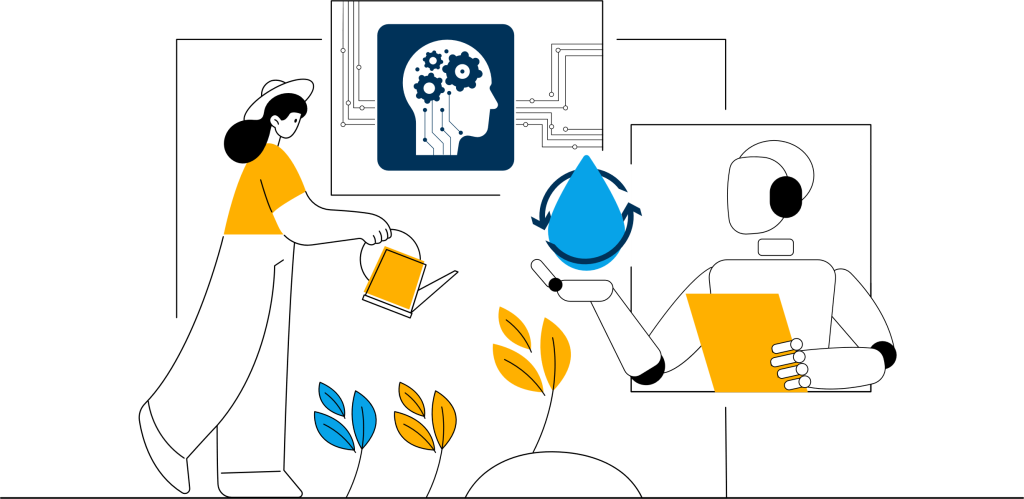
In today’s technological era, industries across the board are preparing to benefit from new technologies and trends. The utilities sector is no exception, driving the digital transformation of the water cycle.
The digitalization of the water cycle is a strategy to improve the management of water as a public resource . It involves the use of advanced technologies, such as the internet of things (IoT), artificial intelligence (AI), big data, among others. By connecting the physical world with digital tools, this approach allows for real-time data gathering and insights, helping people make better and more accurate decisions. The ultimate goal is to boost efficiency, promote sustainability throughout the water cycle, and deliver higher-quality services to users.
Key components for the water cycle digitalization
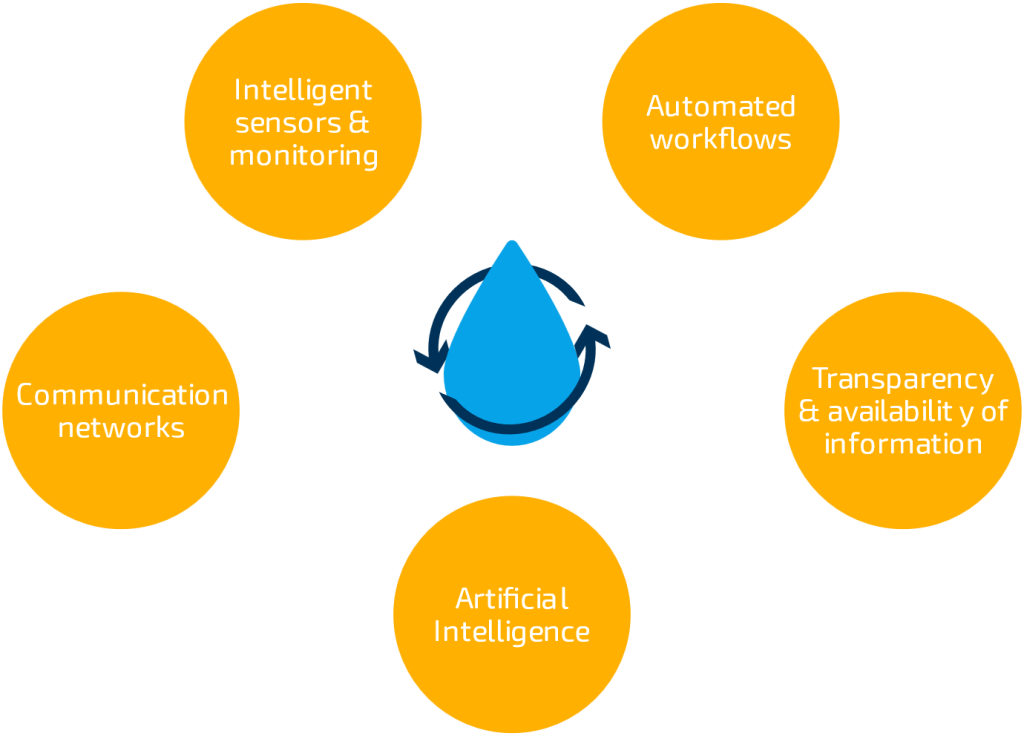
Intelligent sensors & monitoring
Installing sensors and real-time monitoring devices in water infrastructure is crucial for collecting data on key parameters like flow, quality, and pressure. This ensures continuous and accurate performance monitoring, enabling improved management and quicker issue resolution.
Communication networks
Developing robust communication networks is crucial for transmitting the data collected by sensors to analysis and management platforms. These networks link physical infrastructure with digital systems, enabling efficient data processing, accurate monitoring, timely decision-making, and effective water infrastructure management.
Artificial Intelligence
Leveraging artificial intelligence algorithms plays a critical role in analyzing water system data, uncovering patterns, detecting trends, and identifying potential issues beyond conventional methods. It also enhances user experience with virtual assistants that provide personalized support and efficient communication.
Automated workflows
Implementing automated workflows streamline processes by reducing manual effort, minimizing errors, and saving valuable time. This enhances efficiency, accelerates results, and ensures consistent performance while allowing adaptability to changing needs.
Transparency & availability of information
Providing easy access to information about water use and management through online platforms and mobile applications empower users to track consumption, promote conservation, and adopt responsible habits. Additionally, these platforms can foster transparency, facilitate feedback, and strengthen collaboration between the utility and final customers.
With an understanding of the key components necessary for effective water digitalization, let’s review its potential benefits:
Benefits of water digitalization
Operational Optimization
Automated workflows, combined with artificial intelligence and virtual assistants, enable utilities to streamline processes, allowing them to focus their efforts on more time-consuming activities.
Reduction of Water Losses
The implementation of digital technologies like intelligent sensors helps identify and minimize water losses in distribution networks, resulting in significant savings and more efficient use of available water resources by the users.
Real-Time Data Analysis
Digital tools offer real-time data analysis to optimize decision-making by providing accurate insights, identifying trends, and predicting outcomes. Additionally, the analyzed information can help improve customer service and satisfaction.
Improved Customer Service
New technologies, such as virtual assistants, artificial intelligence, and automated workflows enhance service reliability, communication, and efficiency. These innovations also enable more personalized offers and provide accurate support tailored to customer needs.
The digitalization of water represents a significant advancement in the utility sector, that goes hand in hand with new technologies and essential components that will allow companies to obtain the great benefits mentioned above.
This expands the need for utilities to take a step towards a change in their systems and solutions adopted for their business, emphasizing the need for modern technological systems that natively include the necessary components to begin the journey toward water digitalization. Smartflex, a modern CIS designed by Open Intelligence, is equipped with native capabilities in artificial intelligence, workflow automation, virtual assistants, and much more. These capabilities assist companies looking to enter the new digital era and obtain the greater benefits that come with it.
Smartflex’s innovative technology and adaptability, designed especially for utilities, go beyond traditional meter-to-cash functionalities by providing significant advantages in scalability, reliability, security, and flexibility that align with digital transformation trends. As a result, Open´s clients have been able to adapt to changes in their business models and seamlessly align their operations to meet the demands of digital transformation.