
Utility companies are continually adapting their processes to meet new regulations and keep up with their ever-changing customer base. To help them achieve their goals, Smartflex has improved its CIS solution to give companies more flexibility and efficiency through the management of customized collection plans.
For utility companies to survive, they must ensure their financial sustainability with effective collection management processes. While this is universally considered an important business area, it is surprising how varied service providers are when it comes to how they contact customers and persuade them to pay their bills. Some forward-thinking companies are moving towards a new approach which aims to improve overall service while minimizing the number of disconnections; this new collection strategy is based on two-way communication as customers and utilities work together to make sure bills get paid. For service providers to be truly successful in implementing customer-centric collections, they must tailor business processes to their specific circumstances in a way which maximizes the collection of all payments, including those which are not overdue.
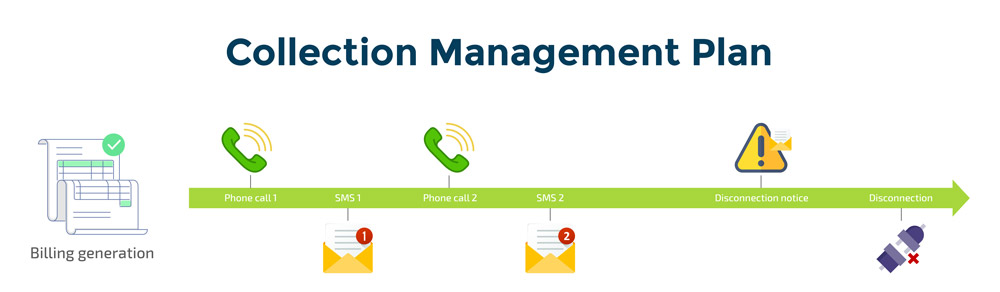
One thing holding the utility industry back from making meaningful progress in this area is the fact that software packages typically offer collection processes as unmodifiable templates which are only suitable for a specific set of customers and market conditions. To solve this, the Smartflex CIS solution offers a powerful tool to configure collection plans based on the unique conditions of each company, empowering them to assure revenues and enhance operational efficiency. Furthermore, Smartflex is capable of automatically stopping collection activities when a customer makes a payment, sets up a new arrangement, or declares bankruptcy, which means utilities can respond to customer actions faster than ever.
Over 35% of Americans have debts and unpaid bills that have been reported to collection agencies1
When it’s time to cut off service, Smartflex automatically checks a broad set of conditions before initiating the disconnection process. For example, a utility may choose to stop disconnections due to weather conditions, seasonal changes, or specific situations such as households containing somebody on life support. Moreover, Smartflex considers the smart metering capabilities of each household and then chooses to either disconnect service remotely or issue a work order to the field service team.
To ensure revenue streams in a changing world, utilities must continue to design effective collection management plans which grow and adapt to market conditions. Smartflex makes this possible through the provision of powerful and flexible collection processes that enable companies to execute winning strategies and make sure bills get paid.