To offer prepaid utility services effectively, providers must work with a highly-developed technological solution which is tailored specifically to the unique conditions of their industry.
Prepayment is a commercial strategy which allows the use of services to more closely match the economic capacity of consumers. This model is believed to have started in South Africa in the 80’s, however it has since expanded into other countries such as the United States, the United Kingdom, Argentina, Colombia, Australia and the Philippines. Today, the prepaid business model is showing constant growth, not only in the electricity industry but also venturing into water and gas.
In South Africa, there are currently 4 million users of prepaid electricity. In the United States, prepaid electricity is still a relatively new concept, however, with the current rate of adoption, it is expected that there will be 2.62 million American electricity users on prepayment options by 2021.(1)
Prepayment is already moving quickly in the electricity industry and is starting to get a foothold in the water and gas industries as well. This is the beginning of an important business trend that is helping utilities to improve their position in the market through increased customer satisfaction, as well as reducing their operating costs for activities such as meter readings, invoicing and the suspension of service. Prepaid, by definition, requires users to pay before using the service, thereby preventing the accumulation of debt and reducing the financial burden of debt write-offs.
Service providers need to make use of this business opportunity in order to streamline customer-facing processes and reduce non-operational losses. The key for moving forward with prepayment processes is to invest in a specialized and well-integrated solution which combines specific industry knowledge with the flexibility to adapt to the unique needs of each business.
The majority of prepayment solutions cover the main processes such as sale, administration of top-ups and the control of consumption, but they fall short of providing full support to related customer care and billing services; this support ends up being provided by independent platforms when it really should be integrated into the principal software solution. Without a unified system, the lack of cohesion between commercial processes impairs informed decision-making and reduces operational efficiency.
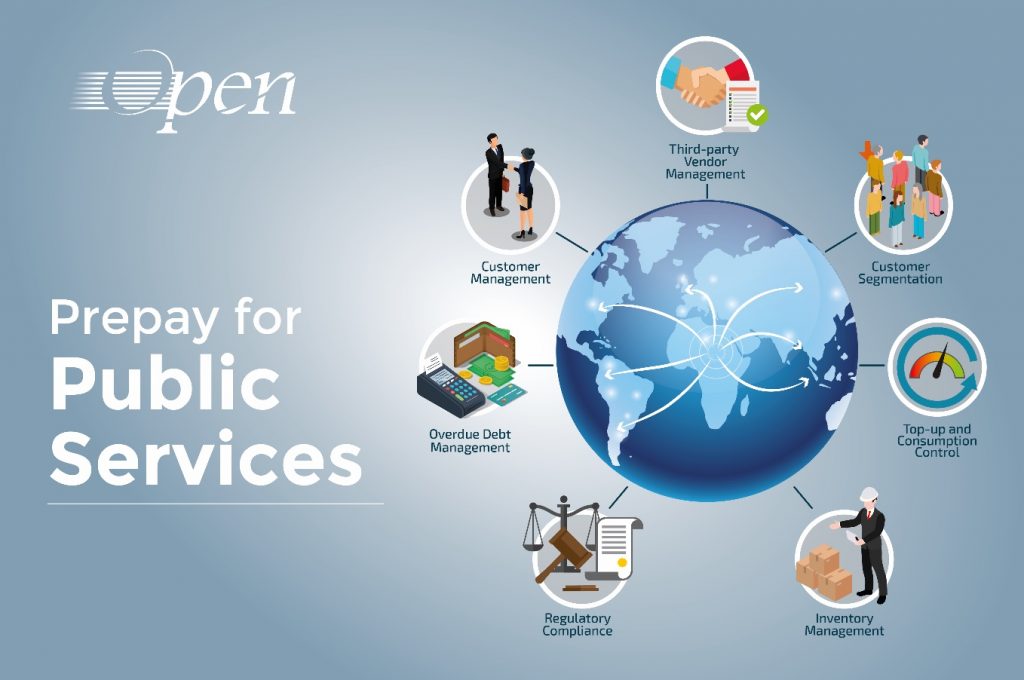
In order to ensure comprehensive and well-integrated management of a prepayment strategy, it is vital that the chosen software solution supports all the necessary commercial activities:
- Customer Segmentation: Groups users according to specific characteristics, with the objective of offering plans adjusted to their profile.
- Customer Management: Facilitates the real-time administration of user information including their orders, requests, and complaints.
- Top-up and Consumption Control: Allows service providers to control the consumption of their customers with centralized information. At the same time, it permits the administration of physical points of sale for top-ups; both those owned by the service provider and those owned by third parties.
- Regulatory Compliance: Allows companies to be quick and flexible when reacting to regulatory changes, including those relating to subsidies and contributions. Regulations in several instances can depend on characteristics typically housed in the primary customer database, hence, it is critical to have seamless integration with the customer management system of record.
- Inventory Management: Keeps track of the equipment and tools required for the provision of prepaid services such as smart meters.
- Overdue Debt Management: Configures debt recuperation programs, for example, 10% of each top-up payment made by a client with an outstanding debt could be redirected towards servicing their debt.
- Third-party Vendor Management: Administer the relationship with external recharge providers like banks or payment points; this management includes settling commissions for the sale of recharges.
With a prepayment strategy, service providers are alleviated from the burden of dealing with bad debt, while consumers benefit from the certainty of only using as much as they can afford; it becomes easier than ever to provide attractive and personalized offers to clients through online prepaid platforms. With the right tools in place, your company will be poised to re-invent itself with prepayment programs and begin enjoying the benefits of this growing commercial strategy.
(1) Prepaid Energy Hub, http://prepaidenergyhub.com/new-study-forecasts-2-62m-us-prepaid-electric-customers-2021/