
System performance and downtime can hinder more than your business growth. Find out just how much system performance is affecting your customers, your users, and your company.
How many hours of system downtime did your business experience last year? According to the Information Technology Intelligence Corp, 81% of organizations now require a minimum system availability of “four nines” or 99.99%. Companies often have the misconception that system availability is purely an IT problem; however, it is clearly a problem for the entire business.
With possible losses of up to hundreds of thousands of dollars per hour, service providers must take the issue of system downtime as seriously as they do revenue growth, especially considering that finances are just one of the many business areas negatively impacted by downtime. The following are examples of the many consequences that business can face when they fail to adequately address the threat of system performance issues and downtime:
Loss of revenue and Service Level Agreements (SLA) penalties
 System downtime is as much about revenues as it is about IT, as service providers can experience sky-high revenue losses for each hour their systems are out-of-service. Of course, this does not include additional costs which are hard to put a dollar figure on such as degraded performance or customer churn. System failures may lead to a large number of service requests which cannot be processed in time, potentially leading to costly penalties due to violations of SLAs.
Loss of data
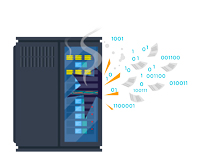 In the modern market, it is very common for companies to have high data traffic. While telecommunication providers are familiar with this issue, utilities in the process of rolling out AMI will soon experience an increase in meter data volume of up to 3,000 times(2). Turning this data into valuable information requires a high-powered IT system which interacts with a wide range of business areas. With such a system in place, every minute of downtime can cause hundreds of delayed transactions, affecting customers, meters, and field operations.
Diminished productivity
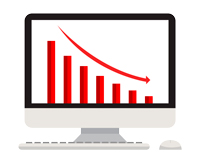 Many of your employees depend on your software solution to do their jobs. These solutions usually increase productivity thanks to the automation of processes; however, in periods of downtime, employees are left without the essential tools they need to perform their work. This lowers productivity and can lead to missed deadlines, lower KPIs, and even increased labor costs due to overtime hours.
Reduced confidence
 Regardless of what type of service you provide, users will always expect a fast and smooth experience when interacting with your IT solutions. Employees and end users will steadily lose confidence in your company if they find that the software systems are not offering a smooth and reliable experience.
Damaged reputation
 News travels fast and bad news travels faster, so it is important that you work hard to keep customers and employees satisfied with your system’s performance. This is especially important to companies in competitive markets, as potential customers are likely to shy away from your company and current customers may start looking elsewhere.
Fortunately, there are strategies your company can adopt to minimize system downtime. One of the solutions that may come to mind is to scale up IT hardware; however, this is highly expensive and often less effective than improving the efficiency of existing systems. A better, more efficient option in terms of cost, sustainability, and scalability is to closely monitor the critical aspects that affect and potentially threaten your system’s performance.
Learn how to minimize total system out-of-service time, avoiding possible profit loss, improving customer satisfaction and final user confidence.